DAS logo


Planting For Wildlife

Basics of Planting for Wildlife
Some Useful Non-Native Plants
Natural Planting and Neighbors
Plant List
Books
Suppliers
Links


Basics of Planting for Wildlife

Most American yards are designed around a simple plan:  a lawn with perhaps some trees, shrubs, and ornamental plants like flowers.    However,  lawns and many of our non-native ornamental plants don’t provide adequate food or shelter for birds or the insects they eat. To create healthy habitat, we need to reduce lawn and add as many native plants and pollinator-friendly plants as possible.  (Pollinator-friendly plants include a wide range of herbs and flowers that may not be native but still have much to offer native invertebrate species. See list below)


Photo provided courtesy of the
Minnesota DNR

In thinking about how to plant a wildlife-friendly yard, consider what the land was like several hundred years ago. An acre of North American land could support dozens of plant species, each of which supported a myriad of invertebrates species, providing ample food for species farther up the food web.

In contrast, not only does the typical American yard host far fewer plant species, but homeowners often try to eradicate insects and other invertebrates, not realizing that they are the prime food source for songbird nestlings. 

To help wildlife, we need to provide a wide variety of native plants of different heights, in hedgerows or large clumps. Called "planting in layers," the layers consist of canopy (large) trees, smaller trees, shrubs, herbaceous plants (grasses, perennials, annuals), surface plants (ground covers) and climbing plants (vines). Diversity of plant species, shape, and size enables many types of animals to find food and shelter, whether they are perching birds, ground-dwelling frogs, insects, or mammals. Once established, native plants require less care than exotics if situated
Photo by Pat Thomas. Layered planting.
properly. You'll water less, and if you plant closely you'll weed less as well. Moreover, natives will attract beneficial insects to your yard which will kill pests such as aphids and spider mites, making the use of pesticides unnecessary. 

Another reason to plant natives is aesthetic: your yard will evoke a sense of place, and you'll be able to closely observe the lives of birds, bees, butterflies, and numerous other companions with whom we share the land. Moreover, a recent study found that properties planted with native plants use an average of 77% less water and cost 68% less to maintain.*

Beware of "meadow-in-a-can" seed mixes. These mixes, often sold in nurseries and garden catalogues, promise quick carpets of meadow flowers. Unfortunately, many of the seeds in these mixes are non-native, invasive species. Others are annuals that will die off after one season. Establishing a wildlife meadow takes time and patience. Beware of advertising that promises instant gratification! To find beneficial seed mixes, please see the supplier list below.

Some non-native plants are useful for wildlife.

Planting with natives is good for wildlife, but we don't have to be absolute purists. When selecting non-native plants, it is important to "first, do no harm." That is, make sure whatever you're planting will not escape your property and become invasive. It is easy to research a plant on the internet to find out if it is a problem in your region. The Minnesota DNR has a good website page on invasives to get you started. Be aware that invasive plant species include several trees, such as Norway and Amur maples, so whatever type of plant you're considering, it's good to check.


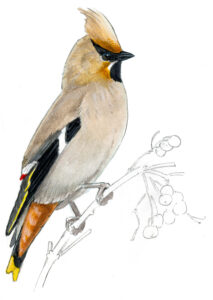
Waxwing in crabapple tree.

Many non-native fruiting trees are wonderful for both pollinators and birds. Non-native crabapples seem to be just as beneficial as their native brethren, and in fact, many plant specialists say that interbreeding between native and non-native crabapple species has made distinctions between them sometimes difficult to draw. Similarly, both native and non-native plums (prunus species) have value for wildlife. These can be important food sources for birds in winter.

The key is to become aware that what you plant affects the plant and animal life around you. An ecology-based landscape doesn’t happen overnight. Proceed at your own pace, and realize that every little bit you do makes a difference. Below you will find plant lists, plant suppliers, and other resources to help you begin to restore your land to a state that supports an abundance of native wildllife.

Back to Top

Natural Planting and Neighbors

If you live near neighbors who value neat, tidy lawns, you can still make your yard more inviting to wildlife. Many people continue to keep up a smaller lawn, and expand their flower beds and shrub borders, using native plants rather than exotics. Some people get rid of the lawn entirely but group plants in discreet clumps, with a ground cover of stones or wood chips between them. 

Consider having your yard certified as a Wildlife Habitat by National Wildlife Federation. You will receive a metal sign to alert neighbors to the fact that there is a purpose behind the changes you’re making. You might even get some of them interested in following suit.

Plant List

Click here to access the PDF plant list, provided by Pat Thomas.

Books

Click here to access the PDF Books list, provided by Pat Thomas.


Back to Top

Suppliers

Lake Superior Garden Center

5137 Jean Duluth Rd.
Rice Lake Township, MN
218-525-7477

They sell many native plants and do landscaping.

Boreal Natives


Cloquet, MN
218-729-7001

Local native plant specialists; provide plants and landscaping.
Leaning Pine Nursery Natives


South Range, WI
715-398-5453

Prairie Nursery


Westfield, WI
1-800-476-9453

excellent, informative catalog

Prairie Moon Nursery


Winona, MN
1-866-417-8516

South St. Louis Soil and Water Conservation District

215 N. First Ave. East, Rm. 301
Duluth, MN 55802

Holds a yearly sale of native trees and shrubs at excellent prices.

Upper Midwest Native Seed Mix. This mix developed by Minnesota Native Landscapes includes high quality native perennial wildflowers that are highly attractive to pollinators, and appropriate for natural habitat restoration in the following states: MN, WI, IA, ND, and SD. This mix is sold as “pure live seed” as opposed to “bulk seed” and is calculated at a robust seeding rate of 40 seeds per square foot, per acre. To order, please click here.

Back to Top

Links

Brief summary of steps from National Audubon Society on how to make your yard wildlife-friendly.
 
Extensive website on landscaping with native plants in Minnesota, bu the University of Minnesota Extension Service.

"Going Native with the Yard," a Minneapolis Star Tribune story about a Minnetonka resident's restoration of her suburban landscape to "what it might have looked like 200 years ago, before lawn and buckthorn." Has a slide show of photos before, during, and after her work.

Restoring the Landscape, an excellent website and blog by a central Minnesota homeowner who has transformed her lawn using native plantings. Many photos and good information.

Minnesota Native Plant Society provides education about our state's native plant communities.

Plant Native has great web resources for learning about natural landscaping, including an excellent tutorial on making the transition into ecology-based gardening.

More good information from the MN DNR.

National Audubon Society's information and graphic display on the components of a wildlife-friendly yard.

Planting pollinator-friendly gardens benefits birds as well, since birds depend on healthy invertebrate populations for their well-being. For free pollinator-friendly planting guides, visit the Pollinator Partnership's website.

Back to Top


Duluth Audubon Society
P.O. BOX 3091 • Duluth, MN 55803 • das@duluthaudubon.org
Jane • janedas@q.com

Site Links
Home Page | Support Us | Contact Us | Issues & Action
Helping Birds - Building Habitat for Birds, Why Birds Need Help | Planting for Wildlife
Food & Shelter | Project Birdsafe | Toxins | Exotic Species | Orphaned & Injured Birds
Citizen Sci & Ed - Educational Programs | Citizen Science Programs
Maps & Checklists | Library - Suggested Books & DVDs | Articles
Birding Pages - Birding Forum | Birding


site by www.vitzki.com